
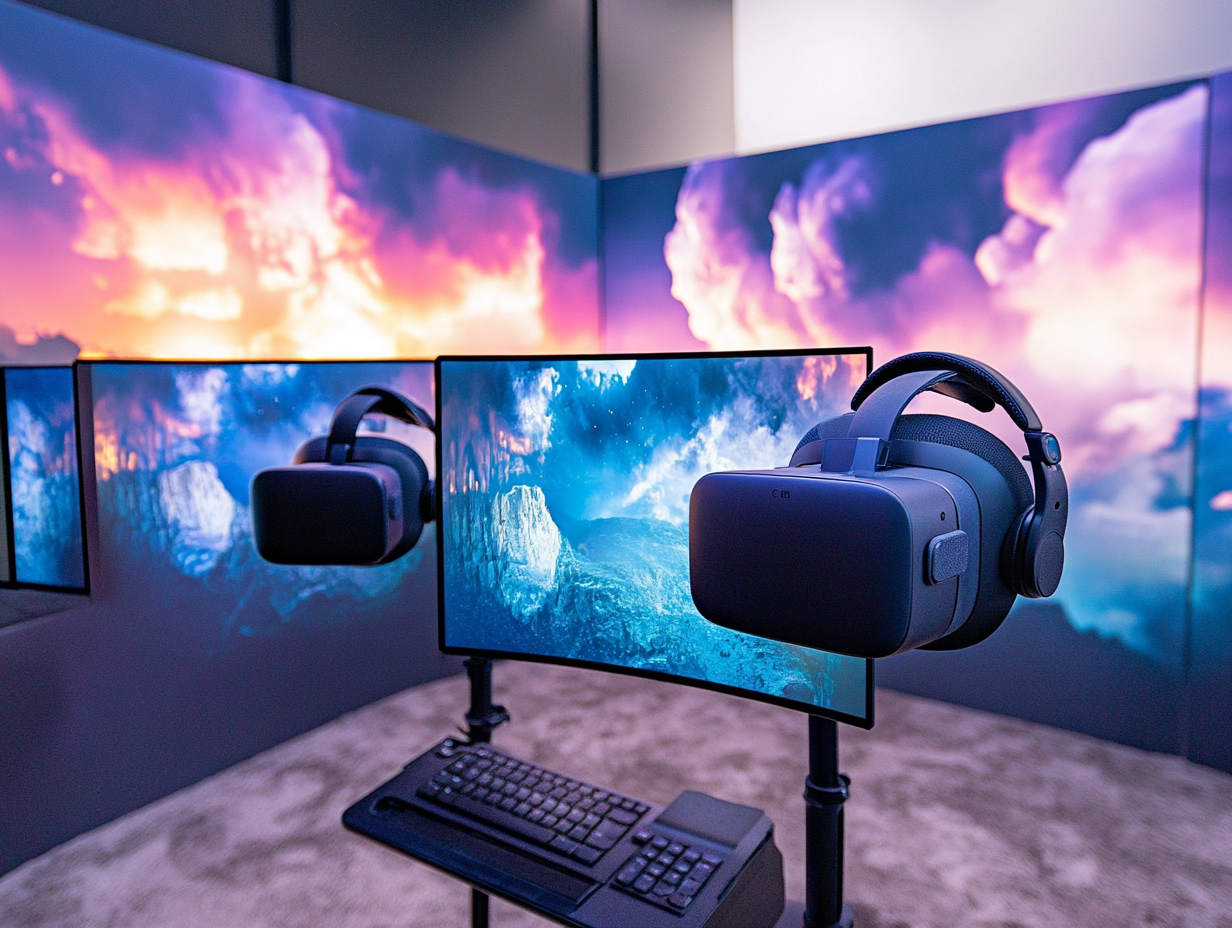
For our latest project, we designed and executed a fully immersive virtual event for a leading tech company. Combining cutting-edge 3D visuals with interactive breakout rooms, the event brought together 5,000 participants across five continents. With seamless live streaming, interactive networking, and personalized attendee journeys, the experience was a showcase of what’s possible in the digital space.
Key Highlights:
• Over 95% positive feedback from attendees.
• Real-time translation in five languages.
• A record-breaking number of attendee engagement in Q&A sessions.

The pandemic fundamentally shifted how we think about events, but it also revealed something remarkable: when executed with excellence, virtual events can transcend the limitations of physical gatherings. They break down geographical barriers, reduce environmental impact, and create opportunities for connection that traditional events simply cannot match. The key lies not in trying to replicate in-person experiences digitally, but in embracing the unique advantages that virtual platforms offer.
The Evolution of Virtual Event Excellence
Virtual events have evolved far beyond basic video conferencing. Today’s sophisticated platforms offer immersive 3D environments, spatial audio, haptic feedback integration, and AI-powered networking that can actually improve upon traditional networking experiences. The technology enables personalized attendee journeys that adapt in real-time based on individual preferences and behavior patterns.
Our success with the 5,000-participant global tech conference demonstrated that scale doesn’t have to sacrifice intimacy. Through intelligent breakout room algorithms, participants were matched based on shared interests, professional backgrounds, and conversation preferences. This created more meaningful connections than the random encounters typical of physical conference networking sessions.
Companies looking to enhance their virtual offerings often combine these experiences with team building activities in Singapore for hybrid events that maximize both digital reach and local team bonding opportunities.
Singapore’s Virtual Event Advantages
Singapore’s strategic time zone position makes it ideal for hosting virtual events that span Asia-Pacific, Europe, and even parts of the Americas. The city-state’s robust digital infrastructure and high-speed connectivity ensure reliable streaming and minimal latency issues that can plague virtual events hosted from less connected regions.
Local production facilities in Singapore offer world-class technical capabilities at competitive rates compared to traditional event hubs like London or New York. The availability of multilingual technical teams who understand both Western and Asian business cultures provides crucial advantages for companies hosting international virtual events.
Singapore’s government support for digital transformation initiatives has created an ecosystem of virtual event technology providers, streaming specialists, and digital experience designers that companies can tap into for comprehensive virtual event solutions.
Technology Stack for Virtual Event Excellence
Platform Selection
Choose platforms based on your specific needs rather than popularity. For large conferences, dedicated event platforms like Hopin or Remo offer better features than general video conferencing tools. For intimate gatherings, customized Zoom configurations with branded backgrounds and interactive features may suffice.
Audio-Visual Quality Standards
Professional-grade equipment makes the difference between amateur and excellent virtual events. Invest in multiple camera angles, professional lighting setups, and broadcast-quality audio systems. Our tech conference used six camera angles and dynamic switching to maintain visual interest throughout lengthy presentations.
Real-Time Translation and Accessibility
Global events require sophisticated translation solutions that go beyond basic subtitles. AI-powered real-time translation combined with human interpreters for nuanced content ensures no participant feels excluded. Our five-language solution included not just translation but cultural adaptation of content for different regions.
Interactive Engagement Tools
Polls, Q&A systems, virtual whiteboards, and gamification elements prevent passive consumption. Our record-breaking Q&A engagement resulted from integrating social media feeds, live polls during presentations, and AI-moderated question prioritization that ensured the most relevant queries reached speakers.
Designing Personalized Attendee Journeys
Unlike physical events where everyone follows similar paths, virtual events can create completely customized experiences for each participant. Pre-event surveys combined with real-time behavior tracking allow dynamic content recommendations and networking suggestions.
Pre-Event Personalization
Send customized agenda suggestions based on job roles, industry interests, and learning objectives. Create personalized welcome videos that mention attendees by name and reference their specific interests or previous event participation.
Dynamic Content Adaptation
Use analytics to identify when participants are losing engagement and automatically suggest relevant breakout sessions or networking opportunities. Our platform tracked attention metrics and suggested content switches when engagement levels dropped below optimal thresholds.
Post-Event Continuation
Virtual events can extend indefinitely through recorded content libraries, ongoing discussion forums, and scheduled follow-up networking sessions. This creates lasting value that physical events struggle to match once attendees leave the venue.
Overcoming Virtual Event Challenges
Attention Span Management
Virtual audiences have shorter attention spans than in-person attendees. Structure content in 15-20 minute segments with interactive elements every 5-7 minutes. Our tech conference used “energy breaks” with music, movement prompts, or quick networking games to maintain engagement throughout eight-hour programming.
Technical Troubleshooting
Prepare for technical issues with redundant systems, dedicated IT support teams, and clear escalation procedures. Provide pre-event technical testing sessions and simplified backup access methods for participants experiencing difficulties.
Creating Authentic Networking
Virtual networking requires more structure than organic in-person interactions. Use icebreaker prompts, shared activities, and time-limited conversations to create meaningful connections. Our platform included “networking roulette” that paired participants for brief conversations before suggesting whether to continue or move to new connections.
Measuring Virtual Event Success
Virtual events provide unprecedented data insights compared to physical gatherings. Track not just attendance but engagement depth, content consumption patterns, networking connection quality, and post-event action taking.
Engagement Metrics
Monitor active participation rates, session duration, interaction frequency, and content sharing. Our 95% positive feedback correlated strongly with high engagement scores, suggesting that participant satisfaction directly relates to active involvement rather than passive consumption.
Learning Outcomes
Use pre and post-event assessments to measure knowledge transfer and skill development. Virtual events can include integrated testing and certification that provides immediate validation of learning objectives.
Network Effect Analysis
Track connections made during events and monitor whether these relationships continue post-event through ongoing platform engagement or external collaboration. This provides ROI data that traditional events cannot easily measure.
Future-Proofing Virtual Event Strategies
Virtual event technology continues advancing rapidly. Augmented reality integration, AI-powered networking, and haptic feedback systems will become standard features within the next few years. Companies investing in virtual event excellence today position themselves advantageously for these technological advances.
The environmental benefits of virtual events also align with corporate sustainability goals, providing additional justification for virtual event investment beyond immediate cost savings and global reach advantages.
Hybrid Event Integration
The future lies not in choosing between virtual and physical events, but in creating seamless hybrid experiences that leverage both formats’ strengths. Virtual components can extend physical events globally while in-person elements provide authentic networking and hands-on experiences that digital formats cannot replicate.
Singapore’s position as a regional hub makes it ideal for hosting hybrid events that combine local physical gatherings with global virtual participation. This approach maximizes reach while maintaining the relationship-building benefits of face-to-face interaction.
Companies successfully implementing hybrid strategies often discover that virtual components enhance rather than compete with physical event elements, creating comprehensive experiences that serve diverse attendee preferences and constraints.
Ready to break boundaries with virtual event excellence that delivers global reach without sacrificing engagement? Our team combines Singapore’s technical advantages with international experience to create virtual events that exceed expectations. Whether you’re planning team building experiences or global conferences, we specialize in virtual event solutions that build genuine connections and deliver measurable results across any distance.